December 6, 2007
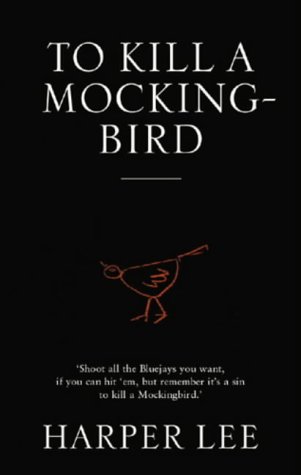
To Kill a Mockingbird | Introduction
When To Kill a Mockingbird was published in 1960, it brought its young first-time author, Harper Lee, a startling amount of attention and notoriety. The novel replays three key years in the life of Scout Finch, the young daughter of an Alabama town's principled lawyer. The work was an instant sensation, becoming a best-seller and winning the Pulitzer Prize for fiction. Scout's narrative relates how she and her elder brother Jem learn about fighting prejudice and upholding human dignity through the example of their father. Atticus Finch has taken on the legal defense of a black man who has been falsely charged with raping a white woman.
Lee's story of the events surrounding the trial has been admired for its portrayal of Southern life during the 1930s, not only for its piercing examination of the causes and effects of racism, but because it created a model of tolerance and courage in the character of Atticus Finch. Some early reviewers found Scout's narration unconvincing, its style and language too sophisticated for a young girl. Since then, however, critics have hailed Lee's rendering of a child's perspective—as told by an experienced adult—as one of the most technically proficient in modern fiction. A regional novel dealing with universal themes of tolerance, courage, compassion, and justice, To Kill a Mockingbird combined popular appeal with literary excellence to ensure itself an enduring place in modern American literature.
Read More......
Posted by lingerielingeries.blogspot.com at 12:01 AM
Labels: Literature and Fiction Books
December 5, 2007
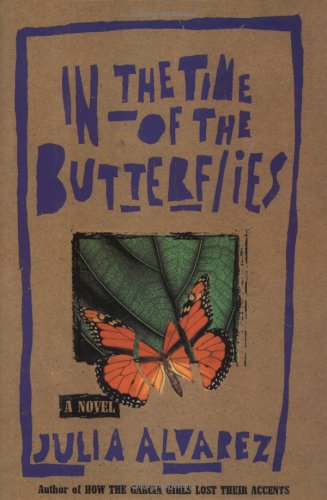
In the Time of the Butterflies | Introduction
When people think of the Dominican Republic in the twentieth century, two words most often come to mind: Rafael Trujillo. He ruled the island nation from 1930 to 1961. His dictatorship was defined by greed, a rigid control over the Dominican people, and unspeakable brutality. But many would also have people remember another history of the Dominican Republic, a history of brave resistance and immense sacrifice. Two different words come to mind when thinking of this history: Las Mariposas, or The Butterflies. These were the code names of Minerva, María Teresa, and Patria Mirabal, three sisters who were key members in an underground movement to overthrow Trujillo. On November 25, 1960, the dictator's men ambushed their car, and the sisters were beaten to death. Since that time, they have become symbols of courage, dignity, and strength in their country.
In 1994, Julia Alvarez brought the Mirabals' story to an American audience through her novel In the Time of the Butterflies. Alvarez's connections to this story run deep, since her own parents were involved in the underground movement and fled to America before being arrested. She does not write a history or a biography, however. She fictionalizes the Mirabal sisters and depicts their lives through the voices she creates for them. She even includes Dedé Mirabal, the only sister to survive, as a voice of the present reflecting on the past. Through her characters, she stresses the need to remember the past, even times of great pain, while also striving for happiness in the present and the future. Perhaps more importantly, she stresses the need to see heroes not as superhuman, but as people who fight their own fears in order to fight injustice.
[via]
Read More......
Posted by lingerielingeries.blogspot.com at 2:11 AM
Labels: Literature and Fiction Books
Macbeth - Introduction
Probably composed in late 1606 or early 1607, Macbeth is the last of Shakespeare's four great tragedies, the others being Hamlet, King Lear and Othello. It is a relatively short play without a major subplot, and it is considered by many scholars to be Shakespeare's darkest work. Lear is an utter tragedy in which the natural world is amorally indifferent toward mankind, but in Macbeth, Shakespeare adds a supernatural dimension that purposively conspires against Macbeth and his kingdom. In the tragedy of Lear, the distraught king summons the goddess of Chaos, Hecht; in Macbeth, Hecate appears as an actual character.
On the level of human evil, Shakespeare's Scottish tragedy is about Macbeth's bloody rise to power, including the murder of the Scottish king, Duncan, and the guilt-ridden pathology of evil deeds generating still more evil deeds. As an integral part of this thematic web is the play's most memorable character, Lady Macbeth. Like her husband, Lady Macbeth's ambition for power leads her into an unnatural, phantasmagoric realm of witchcraft, insomnia and madness. But while Macbeth responds to the prophecies of the play's famous trio of witches, Lady Macbeth goes even further by figuratively transforming herself into an unnatural, desexualized evil spirit. The current trend of critical opinion is toward an upward reevaluation of Lady Macbeth, who is said to be rehumanized by her insanity and her suicide. Much of this reappraisal of Lady Macbeth has taken place in discussions of her ironically strong marriage to Macbeth, a union that rests on loving bonds but undergoes disintegration as the tragedy unfolds.
Read More......
Posted by lingerielingeries.blogspot.com at 2:08 AM
Labels: Literature and Fiction Books
Hamlet - Introduction
Hamlet is without question the most famous play in the English language. Probably written in 1601 or 1602, the tragedy is a milestone in Shakespeare’s dramatic development; the playwright achieved artistic maturity in this work through his brilliant depiction of the hero’s struggle with two opposing forces: moral integrity and the need to avenge his father’s murder.
Shakespeare’s focus on this conflict was a revolutionary departure from contemporary revenge tragedies, which tended to graphically dramatize violent acts on stage, in that it emphasized the hero’s dilemma rather than the depiction of bloody deeds. The dramatist’s genius is also evident in his transformation of the play’s literary sources—especially the contemporaneous Ur-Hamlet—into an exceptional tragedy. The Ur-Hamlet, or “original Hamlet,” is a lost play that scholars believe was written mere decades before Shakespeare’s Hamlet, providing much of the dramatic context for the later tragedy. Numerous sixteenth-century records attest to the existence of the Ur-Hamlet, with some references linking its composition to Thomas Kyd, the author of The Spanish Tragedy. Other principal sources available to Shakespeare were Saxo Grammaticus’s Historiae Danicae (circa 1200), which features a popular legend with a plot similar to Hamlet, and François de Belleforest’s Histoires Tragiques, Extraicts des Oeuvres Italiennes de Bandel (7 Vols.; 1559-80), which provides an expanded account of the story recorded in the Historiae Danicae. From these sources Shakespeare created Hamlet, a supremely rich and complex literary work that continues to delight both readers and audiences with its myriad meanings and interpretations.
In the words of Ernest Johnson, “the dilemma of Hamlet the Prince and Man” is “to disentangle himself from the temptation to wreak justice for the wrong reasons and in evil passion, and to do what he must do at last for the pure sake of justice…. From that dilemma of wrong feelings and right actions, he ultimately emerges, solving the problem by attaining a proper state of mind.” Hamlet endures as the object of universal identification because his central moral dilemma transcends the Elizabethan period, making him a man for all ages. In his difficult struggle to somehow act within a corrupt world and yet maintain his moral integrity, Hamlet ultimately reflects the fate of all human beings.
Read More......
Posted by lingerielingeries.blogspot.com at 2:03 AM
Labels: Literature and Fiction Books
Subscribe to:
Comments (Atom)


